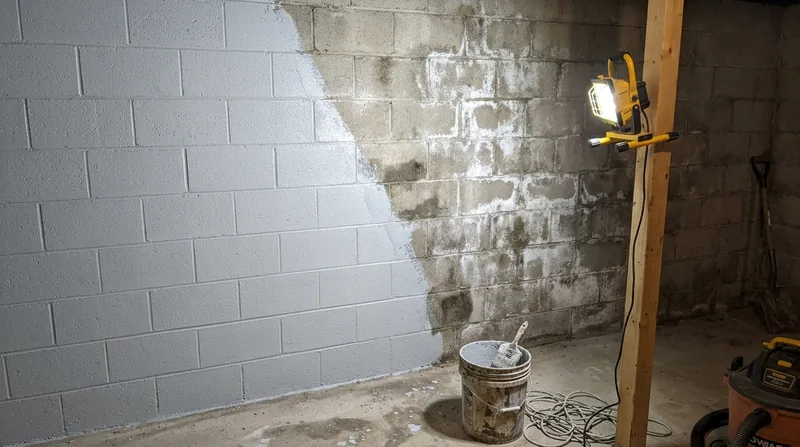




Basement Wall Sealing in Rockford is the first line of defense for the damp, musty walls that show up in this city's older housing stock every spring. The ground here is Wisconsin glacial till and silt sitting over dolomite bedrock, and the water table runs high along the Rock River floodplain and in the creek bottoms near Keith Creek. That means the 1880s to 1930s brick and frame homes on the East and West sides, many with stone or early block foundations, take on water differently than the poured basements out in Loves Park and Machesney Park. We read the wall before we touch it: efflorescence and white salt bloom mean moisture is moving through the masonry, not just sitting on it. If you are chasing a wet basement, start with a full basement waterproofing assessment so the sealer goes on the right problem.
Why Basement Wall Sealing Matters in Rockford's Older Housing Stock
Rockford sits in a freeze-thaw cycle that heaves the frost line every winter, and that movement opens hairline cracks in brick, block, and parged walls. Add spring thaw runoff and summer downpours pushing water into the low lots, and you get the wall seepage that shows up as damp patches after rain. Sealing is not a cure for hydrostatic pressure, but it stops the surface migration that keeps a basement smelling musty.
- We remove efflorescence and loose parging before any sealer goes on, because salt bloom blocks adhesion.
- We test for active moisture with a meter so we know whether the wall is damp or under pressure.
- We apply penetrating sealer on brick and block, and a flexible membrane on poured walls that have hairline cracking.
- We flag the cases where the real answer is an interior perimeter drain, not a coating.
If the wall is wet to the touch a foot above the floor after a hard rain, a sealer alone will not hold it back.
Key info: A 1920s brick foundation in Haight Village and a 1990s poured wall in Roscoe fail for different reasons. The brick wicks water through the mortar joints, while the poured wall cracks at the cold joint. We match the sealer to the wall, not to a one-size product.
Illinois does not license home improvement contractors at the state level, so the City of Rockford's building department is where you verify permit requirements for any drainage or structural work. You can check the City of Rockford for local building department contact and permit rules, which vary by jurisdiction.
How We Seal Basement Walls in Rockford, Step by Step
We do not sell a sealer as a cure-all. The first hour on site is diagnostic: we look at the wall, the floor joint, the window wells, and the grading outside. If the water is coming from a failed footing drain or a high water table, we tell you that a coating will not fix it and point you to the right system. When sealing is the correct scope, here is how the job runs.
- We walk the basement and mark every damp zone, crack, and efflorescence patch.
- We wire-brush and scrape the wall to bare masonry and remove loose parging.
- We treat efflorescence with a masonry cleaner and let the wall dry to a tested moisture level.
- We fill active cracks with epoxy or polyurethane injection before any surface sealer goes on.
- We apply the penetrating or membrane sealer in lifts and back-roll it into the pores.
- We check the floor joint and cove, and seal that transition separately.
A wall that stays dry for two weeks after the job tells us the diagnosis was right, and we say so in the walkthrough.
Key info: On a 1950s Cape Cod near Keith Creek, the homeowner had water after every summer storm. The wall was damp but not under pressure, and a cracked parge coat was trapping moisture. We removed the parge, injected two shrinkage cracks, and sealed the block. That is a sealing job, not a drain tile job, and we told them so.
For homes in the 61104 ZIP, the older two-flats often have stone foundations where sealing alone will not stop seepage. See our Basement Wall Sealing in Rockford 61104 page for the stone-wall approach.
Sealing Methods We Use on Rockford Basement Walls
Not every wall takes the same product. We choose based on wall material, moisture reading, and whether the seepage is surface dampness or active pressure. The table below shows what we actually apply and when.
| Approach | Description | Best for |
|---|---|---|
| Penetrating sealer | Sinks into brick and block pores and blocks capillary movement without a surface film. | Damp masonry walls with efflorescence and no active pressure. |
| Flexible membrane | Bridges hairline cracks in poured walls and moves with freeze-thaw movement. | Poured basements in Loves Park and Machesney Park with shrinkage cracking. |
| Epoxy injection | Ported and pumped into structural cracks to restore the wall section. | Non-moving cracks in poured and block walls. |
| Polyurethane injection | Foams and expands to seal cracks that are still moving with the frost cycle. | Active leaks and cold joints that reopen seasonally. |
| Cove joint sealing | Seals the wall-to-floor transition where water wicks in at the base. | Damp floor edges after rain with no wall cracking. |
If the table points to injection rather than a coating, our foundation crack repair page covers the porting process in detail.
Basement Wall Sealing Cost in Rockford: What to Expect
Most sealing jobs in Rockford start around $1,500 for a standard basement wall run with surface prep, efflorescence removal, and one sealer application. That figure moves with wall length, wall material, and how much prep the masonry needs. A stone foundation in an 1890s West Side home takes more labor than a clean poured wall in a newer north subdivision. If we find active cracks that need injection, that adds a separate line, and we price it before we start.
We give you the diagnostic first, so you know whether you are buying a sealer or a drainage system. Getting two or three estimates is smart, and we will tell you when another contractor's recommendation for a full interior drain is the honest call. Our pricing overview shows how the line items break down.
Basement Wall Sealing Near Me: How to Vet a Contractor Near Rockford
When you search for basement wall sealing near me, the list you get is mostly marketing. The vetting is on you, and it is simple. Ask for the license and insurance certificate, ask what they will do about efflorescence before sealing, and ask whether they will tell you if a sealer is the wrong answer. A contractor who only sells coatings will never say no.
- Confirm the company is licensed and insured, and ask for the certificate before work starts.
- Get two or three written estimates that separate prep, injection, and sealer application.
- Ask for local references from homes with the same foundation type as yours.
- Verify permit requirements with the local building department for any drainage or structural work.
- Check HOA rules in the north subdivisions before any exterior grading or discharge changes.
Reach us through the contact page to set up the free inspection.
Basement Wall Sealing in Rockford: Pricing Guide
| Service | Price | Details |
|---|---|---|
| Standard wall sealing (single wall run) | Starting at $1,500 | Includes surface prep, efflorescence removal, and one sealer application on a standard basement wall. |
| Full basement perimeter sealing | Starting at $2,800 | Covers all four walls with prep and sealer, priced by total wall length and masonry condition. |
| Crack injection add-on (epoxy or polyurethane) | Starting at $450 per crack | Ported and pumped repair for active or structural cracks before surface sealing begins. |
| Stone or early block foundation | On estimate | Older Rockford stone and brick walls need an on-site look because prep labor varies widely. |
| Travel | Included | In Rockford and surrounding areas, no separate call-out or mileage fee. |
| Estimate | Free | Response within 24h at (815) 706-4084, no obligation to book. |
Indicative pricing, the exact cost depends on square footage, finish, and site access. Free personalized estimate within 24h at (815) 706-4084.


