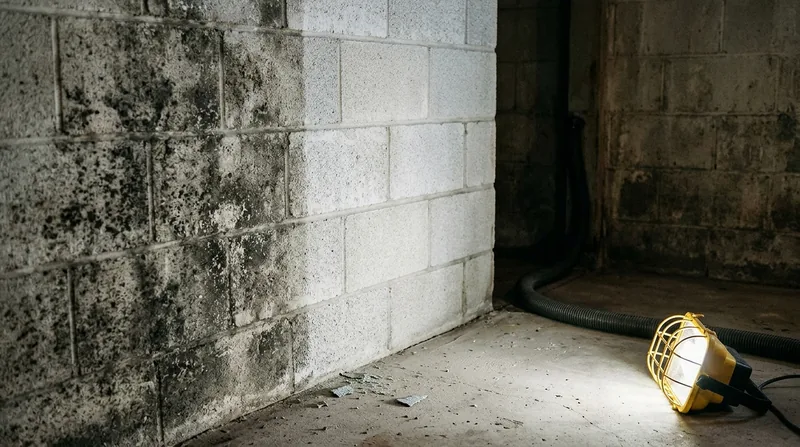




Basement mold remediation in Rockford starts with one hard truth: mold does not grow in a dry basement. Our city sits on Wisconsin glacial till and silt over dolomite bedrock, with a high water table along the Rock River floodplain and in the creek bottoms. The 1880s to 1930s brick and frame homes on the East and West sides, in Downtown and Haight Village, sit on full basements with stone, brick or early block walls and old clay footing drains that have been failing for decades. The 1940s to 1960s Cape Cods and brick ranches in Southeast Rockford and along Keith Creek get water pushed in by hydrostatic pressure after every spring thaw and summer downpour. We treat the moisture, remove the mold, and fix the drainage so it stays gone. Start with a free basement inspection and we will tell you plainly what is wet and why.
Why Basement Mold Grows So Fast in Rockford Homes
Rockford basements stay damp because the water has nowhere to go. Old clay footing drains clog with silt, stone and brick walls wick groundwater, and the frost line heaves the ground every winter. Add a sump pump that quits during a July storm and you have standing water in a basement that already smells musty. Mold follows within days on drywall, joists, cardboard and stored belongings.
- Spring thaw sends meltwater down the grading and into the low lots along Keith Creek and the Rock River floodplain.
- Summer downpours overwhelm undersized gutters and short downspouts, dumping roof water against the foundation.
- Old clay footing drains in Haight Village and Downtown collapse or root-clog, so the water table rises under the slab.
- Efflorescence and white powder on stone and block walls tell you moisture is moving through the masonry right now.
- A failed sump pump or a stuck check valve turns a damp basement into a wet one overnight.
If you see any of these signs, the mold is a symptom and the water is the cause. We fix the cause first, then remove what grew.
Key info: A Cape Cod in Southeast Rockford near Keith Creek flooded twice last spring. The homeowner bleached the drywall and the musty smell came back in three weeks. The real culprit was a cracked clay footing drain and a sump basin that filled faster than the pump could move it. We corrected the drainage, then removed the affected drywall and treated the framing.
For official guidance on moisture and mold in homes, the U.S. EPA's mold resources are a solid starting point: epa.gov/mold.
How We Remove Basement Mold in Rockford, Step by Step
We do not fog a basement and call it done. Mold remediation here means containment, moisture control, physical removal of affected materials, and a drainage fix so the same wall does not wick water next season. Our process follows the moisture, not a checklist, and we tell you when a simple crack seal is enough and when the real problem is hydrostatic pressure that needs an interior drain tile system.
- We walk the basement and identify the moisture source: wall seepage, floor seepage, a failed sump pump, a backed-up floor drain or condensation.
- We measure moisture in the framing, block and slab, and we trace the musty smell to the surfaces and cavities actually affected.
- We set up containment with plastic sheeting and negative air pressure so spores do not spread to the rest of the house.
- We remove porous materials that cannot be cleaned (drywall, insulation, cardboard) and bag them for disposal.
- We HEPA-vacuum and treat the remaining structural surfaces with an approved antimicrobial, then dry the space with dehumidifiers and air movers.
- We correct the water path with drain tile repair, a sump pump replacement, wall sealing or grading, so the basement stays dry.
- We verify moisture readings are back to normal before we close out the job.
Every job ends with a dry basement and a clear explanation of what we did and why.
Key info: A split-level in Loves Park had mold on the lower wall and a musty smell in the family room. The cause was a downspout discharging two feet from the foundation and grading that sloped back toward the house. We extended the discharge line, re-graded the soil, treated the wall and removed the moldy drywall. No drain tile was needed, and we said so.
Remediation Approaches We Use in Rockford Basements
Not every mold job is the same. A small patch on a block wall from a single crack is a different job from a finished basement soaked by a failed sump pump. Here is how we match the approach to the condition we find.
| Approach | Description | Best for |
|---|---|---|
| Surface treatment and cleaning | HEPA vacuuming and antimicrobial treatment of structural surfaces. | Light surface mold on block or poured walls with a known, fixable moisture source. |
| Containment and material removal | Plastic containment, negative air, removal of affected drywall and insulation. | Finished basements and larger affected areas where porous materials must come out. |
| Moisture correction and drainage | Crack injection, wall sealing, drain tile repair, sump pump replacement. | Recurring mold where hydrostatic pressure or a failed drain keeps the wall wet. |
| Humidity control | Dehumidification and ventilation to keep basement air below the mold growth threshold. | Tight, humid basements in summer and after a wet spring. |
We recommend the least invasive approach that actually solves the moisture problem, and we explain the trade-offs before you commit.
Basement Mold Remediation Cost in Rockford: What to Expect
Most basement mold remediation in Rockford starts around $1,500 for a contained area with a clear moisture source. The price climbs with the size of the affected area, whether the basement is finished, how many materials must be removed, and whether drainage work is needed to stop the water. A single wall with surface mold is a different job from a finished basement soaked by a failed sump pump.
Factors that move the number: square footage affected, access to the space, whether drywall and insulation must come out, whether we find a cracked footing drain or a dead sump pump, and whether the fix is a simple crack injection or a full interior perimeter drain. We give you a written scope before we start, and we separate the remediation cost from the drainage repair so you can see what each part buys you. See the full pricing overview for detail.
Get two or three estimates and compare scope, not just the bottom line. A low number that skips the moisture fix will cost you again next spring.
Basement Mold Remediation Near Me: How to Choose a Contractor Near Rockford
You want a contractor who diagnoses the water before selling you a treatment. Ask whether they are licensed and insured, ask for references from Rockford-area jobs, and ask what they will do about the moisture source after the mold is gone. A company that only sprays and leaves is not solving your problem.
- Confirm licensed and insured status and ask for a certificate before work begins.
- Get at least two written estimates with a clear scope of removal and moisture repair.
- Ask for local references, especially homes of similar age and foundation type to yours.
- Ask whether a permit is needed for any structural or drainage work, and confirm the local building department's requirements.
- Check HOA rules if you live in a subdivision in Loves Park, Machesney Park or Roscoe before exterior drainage changes.
If a contractor will not explain the moisture source in plain terms, keep looking. Reach us through the contact page and we will walk your basement with you.
Musty Smell Diagnostics and Prevention in Rockford
A musty smell is the most reliable early warning you have. It usually means moisture is trapped in framing, drywall or the wall cavity, even when the floor looks dry. We trace the smell with moisture meters and a careful walk of the perimeter, then correct the source. In older homes in Downtown and Haight Village, that often means a failed parging coat or a blocked weeping tile; in newer poured basements in the north subdivisions, it is often a short downspout or a sump pump that short-cycles. We also check the vapor barrier and the humidity level, because a dry wall with wet air still grows mold. Prevention is simple: keep the water out, keep the air moving, and fix the pump before it fails.
Basement Mold Remediation in Rockford: Pricing Guide
| Service | Price | Details |
|---|---|---|
| Surface mold treatment (single wall) | Starting at $1,500 | Includes containment, HEPA vacuuming, antimicrobial treatment and moisture readings on one affected wall area. |
| Finished basement remediation | Starting at $2,800 | Includes removal of affected drywall and insulation, containment and drying; price rises with square footage. |
| Remediation plus drainage repair | On estimate | Needs an on-site look because drain tile, sump pump or crack injection scope varies by foundation type. |
| Travel | Included | in Rockford and surrounding areas, no separate call-out or mileage fee. |
| Estimate | Free | Response within 24h at (815) 706-4084, no obligation to book. |
Indicative pricing, the exact cost depends on square footage, finish, and site access. Free personalized estimate within 24h at (815) 706-4084.


